

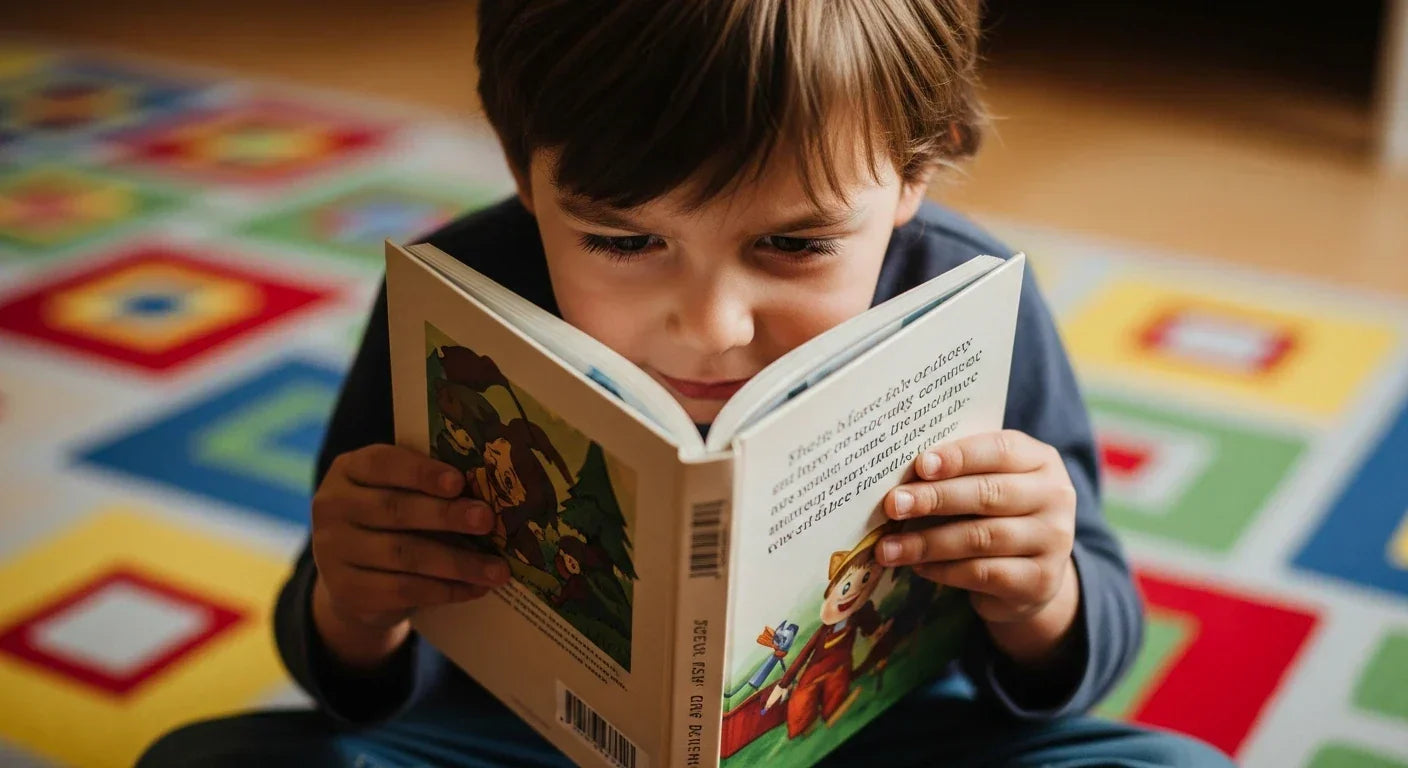
As a parent, you are an expert at spotting a cough, a fever, or a scraped knee. But spotting a vision problem can be much more difficult. The single biggest challenge is that children often have no idea their vision is poor. To them, a blurry, fuzzy world is the only world they’ve ever known it’s their normal.
They won't say, "The whiteboard is out of focus." They're more likely to say, "School is boring," or get frustrated because they can't keep up. Since so much of learning and social development is visual, catching a problem early is the key to unlocking their potential. Here are the key signs to watch for.
1. Physical Signs & Actions
These are the most common clues. You may notice your child trying to physically compensate for their poor vision.
- Squinting or Tilting the Head: This is the most classic sign. A child will squint, frown, or tilt their head in an unconscious effort to change the shape of their eye and find a clearer angle to focus.
- Sitting Too Close: Does your child migrate closer and closer to the television? Do they hold a tablet or book right up to their nose? This is a strong indicator of myopia (short-sightedness), as they are trying to make the image bigger to see it.
- Frequent Eye Rubbing: When the eyes have to work overtime to focus, they get tired and strained. A child who frequently rubs their eyes, especially during or after a visually-focused task like reading or screen time, is telling you their eyes are fatigued.
- Covering One Eye: Children are masters of adaptation. If one eye is significantly blurrier than the other (a condition called amblyopia or "lazy eye"), they may simply cover their "bad" eye with their hand to rely on the "good" one.
2. Performance & Behavioural Signs
Sometimes a vision problem can be mistaken for a behavioural or learning issue.
- Losing Their Place While Reading: Watch your child read. Do they use their finger to track the words on the page (long after their peers have stopped)? Do they skip words or re-read the same line? This can be a sign that the letters are blurry or appear to "jump around" due to an uncorrected astigmatism.
- Short Attention Span (for Close Work): If your child loves playing outside but has a very short fuse for reading, puzzles, or homework, it may not be a lack of focus. It may be that these "near" tasks are visually uncomfortable or even cause headaches, so they avoid them.
- Unusual Clumsiness: Is your child consistently tripping over things, struggling with hand-eye coordination in sports, or having trouble building with blocks? This can be a sign of a depth perception problem, where their eyes aren't working together as a team.
3. What to Do if You're Worried
If any of these signs sound familiar, the next step is simple and reassuring.
Book a Comprehensive Eye Exam. The most important thing you can do is schedule an appointment with an optometrist or paediatric ophthalmologist. A school's "vision screening" is not the same thing. A screening might catch a basic problem, but a comprehensive exam will check your child's full prescription, eye alignment, depth perception, and the overall health of their eyes.
If They Need Glasses... If the optometrist prescribes glasses, focus on making the experience positive. Let them have a say in picking a frame colour they love. For a child's first pair, the priorities are:
- Comfort: The frame must fit their smaller nose bridge well and not slide down.
- Durability: Choose frames made of flexible, resilient materials and lenses (like Polycarbonate) that are impact-resistant and shatter-proof.
At Eye Leux, our in-house, Manchester-designed collection is currently focused on adult and teen sizing, but our core mission is to support a lifetime of healthy vision for the whole family. We believe that a positive first experience with eyewear is the first step.


