

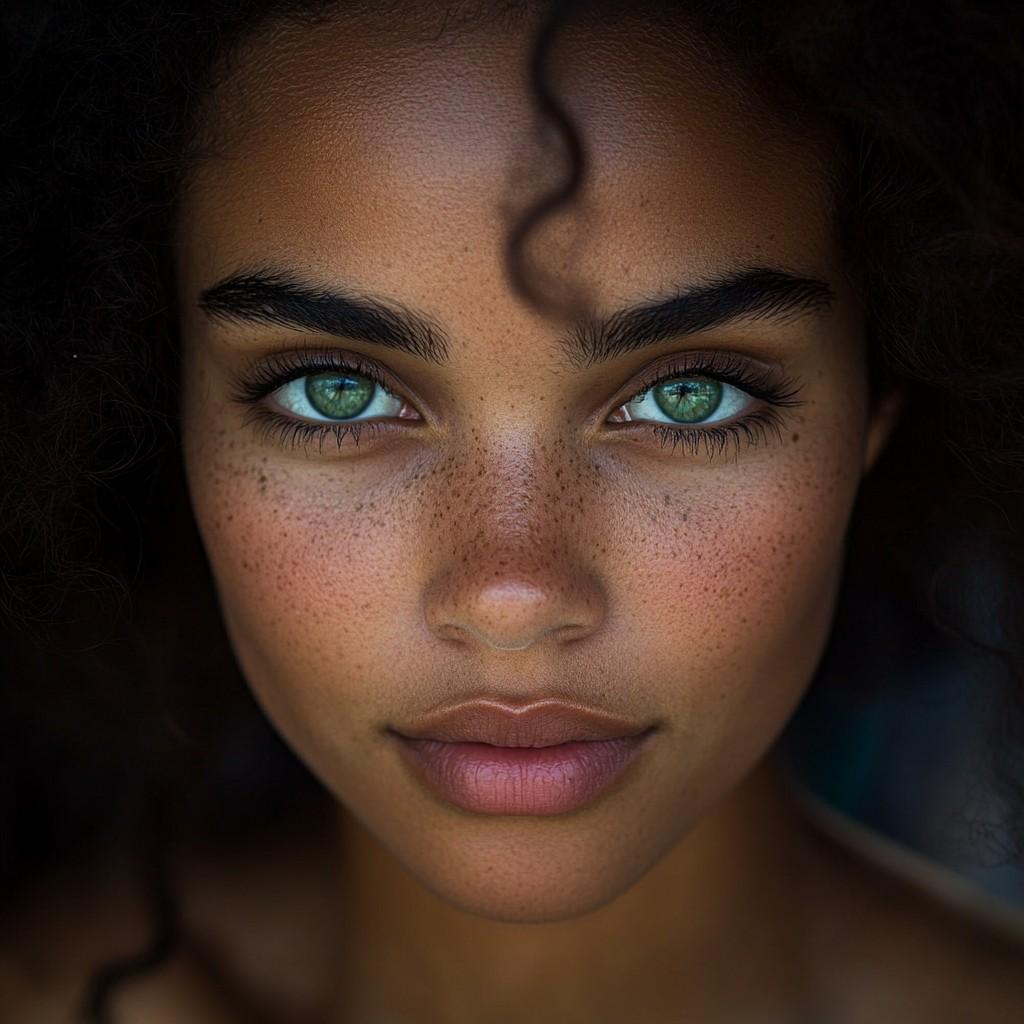
Green eyes have fascinated people for centuries. Studies show that green is the rarest eye color in the world. Their vibrant appearance and mysterious genetics make them one of the most admired eye colors in the world. Whether you've inherited green eyes or you're simply curious about what makes them so unique, there's much more to this eye color than meets the eye.
Unlike brown or blue eyes, green eyes are created through a delicate combination of genetics, melanin levels, and the way light scatters within the iris. This unique interaction gives the eyes their captivating green appearance, even though there is actually no green pigment in the human iris.
Only a small percentage of the world's population has naturally green eyes, making them one of the rarest natural eye colors. Their appearance can range from bright emerald and jade to olive, sea green, and gray-green, creating countless beautiful variations. But did you know that people with green eyes are more sensitive to light and may be more susceptible to sun damage? Here’s a look at this eye color and what (literally) makes it green.
Where Do Green Eyes Come From?
Green eyes are the result of a fascinating combination of inherited genes and biological processes. Unlike simple traits controlled by a single gene, eye color is polygenic, meaning several genes work together to determine the final color of your iris. Unlike brown eyes, which are rich in dark pigment, green eyes have much less melanin. Light is scattered over the iris in a way that reflects a distinct shade of green due to this tiny variation, which is controlled by several genes.
For many years, scientists believed eye color depended on one dominant and one recessive gene. Modern genetic research has shown that the process is much more complex. Multiple genes influence how much melanin is produced and how it is distributed within the iris, leading to a wide spectrum of eye colors.
This complexity explains why children can have eye colors that differ from those of their parents and why siblings often have different eye colors despite sharing the same family.
Genetics and the 16 Gene Factor
Researchers have identified at least 16 genes that contribute to human eye color. Among them, the OCA2 and HERC2 genes have the greatest influence because they regulate melanin production in the iris.
Eye color is determined by genetics, and genetics are … complicated. For example, it can be difficult to predict what color eyes a child will have because as many as 16 different genes help determine their hue.
While up to 16 genes affect eye color, researchers have explicitly connected the development of green and hazel eye hues to the OCA2 gene, which affects melanin synthesis. Pheomelanin, a bright reddish-yellow pigment found in minute amounts in green eyes, interacts with dispersed blue light to give the iris its green color.
The Role of Melanin
Melanin is the natural pigment responsible for the color of your eyes, skin, and hair. In the iris, the amount and distribution of melanin largely determine eye color.
Here's how melanin levels compare:
| Eye Color | Melanin Level | Appearance |
|---|---|---|
| Brown | High | Dark brown to black |
| Hazel eye | Medium to High | Green-brown with golden tones |
| Green | Low to Moderate | Green with subtle yellow or gray hues |
| Blue | Very Low | Blue due to light scattering |
| Gray | Very Low | Cool gray from light scattering |
Green eyes have just enough melanin to create a vibrant green appearance without becoming hazel or brown. Combined with the way light scatters in the iris, this balance produces one of the world's most distinctive eye colors.
Eumelanin and Pheomelanin
Two main types of melanin influence the appearance of green eyes:
- Eumelanin: A dark brown to black pigment that deepens eye color. Higher levels are associated with brown eyes.
- Pheomelanin: A reddish-yellow pigment that contributes warm golden or amber tones.
Green eyes typically contain lower levels of eumelanin along with subtle amounts of pheomelanin. When light interacts with these pigments, the iris takes on green, olive, or emerald shades. The exact mix varies from person to person, which is why no two pairs of green eyes look exactly alike.
Light Scattering and Eye Color
Another key factor behind green eyes is light scattering. As light enters the iris, shorter wavelengths scatter more than longer wavelengths. Combined with the iris's pigment levels, this creates the green color that we perceive.
This effect explains why green eyes can appear brighter outdoors, softer indoors, or even shift between green, gray, and golden tones depending on the lighting. Rather than changing color, the eyes are reflecting light differently.
Variations in Green Eye Shades
Not all green eyes look the same. Shades of green eyes can range from very light to very dark depending on the exact amount of pigment present. Some people may have more of a bluish-green tint to their irises, while others may have more of a yellow or brown tint.
Are Green Eyes Rare?
Yes, green eyes are among the rarest natural eye colors in the world when compared to the number of people with blue, brown, and hazel eyes. It has been studied both in the United States and internationally.
A 2014 survey conducted by the American Academy of Ophthalmology determined that green is the rarest eye color in America. The survey found that only 9% of Americans have green eyes.
According to WorldAtlas, only 2% of the world’s population has green eyes. This makes the color even rarer on a global scale. Globally, green eyes are most found in Ireland and Scotland.
It’s important to note that the 2% figure refers to the “standard” eye colors (brown, blue, hazel, green). Eye colors associated with conditions like albinism, which can sometimes result in red or violet eyes, occur in less than 1% of the world’s population, and may be considered even rarer than green.

How Many People Have Green Eyes?
The new research shows that only a small percentage of people worldwide have naturally green eyes. Here's how common each natural eye color is:
| Eye Color | Estimated Global Population |
|---|---|
| Brown | 70–79% |
| Blue | 8–10% |
| Hazel | Around 5% |
| Green | About 2% |
| Gray | Less than 1% |
| Amber | Less than 1% |
Are Babies Born with Green Eyes?
Most babies are not born with their permanent eye color. At birth, many infants—especially those of European ancestry—have blue, gray, or blue-gray eyes because melanin production in the iris is still developing.
As babies grow and are exposed to light, specialized cells called melanocytes gradually produce more melanin. Over the first several months of life, this can cause the eye color to darken or change.
A baby who eventually develops green eyes may initially have:
- Blue eyes
- Gray eyes
- Blue-gray eyes
As melanin levels increase to a moderate level, the eyes may gradually take on a green appearance.
How Long Does It Take for Eye Color to Change?
For many children, eye color becomes more stable between 6 and 12 months of age. However, subtle changes can continue until around 3 years old, and in some cases even a little longer.
Parents are often surprised to see their baby's eye color evolve during the first years of life. This is a normal part of eye development and reflects the ongoing production and distribution of melanin.
Can Two Brown-Eyed Parents Have a Green-Eyed Baby?
Yes, it is possible—although it is less common.
Eye color inheritance is much more complex than the old idea that one dominant gene determines everything. Scientists now know that multiple genes influence eye color, including how much melanin is produced and how it is distributed in the iris.
If both parents carry genetic variants associated with lighter eye colors, they may have a child with green eyes even if their own eyes are brown. The chance depends on the specific combination of genes each parent passes on.
Can Green Eyes Change Color?
One of the most common questions people ask is whether green eyes can change color. The short answer is yes—but only in appearance. Naturally green eyes may look lighter, darker, or even slightly blue, gray, or hazel depending on several external and biological factors. However, the actual amount of melanin in the iris usually remains the same after eye color has fully developed.
Are Blue and Green Eyes Related?
Yes. Blue and green eyes share many genetic similarities.
Both blue and green eyes are more unusual than brown eyes. But are they associated with one another? Well, sort of. They are similar because they both eye colors develop because of relatively low levels of melanin in the iris. The main difference lies in the amount of melanin and how light interacts with the eye's microscopic structure.
Blue eyes don’t have any blue pigment in them. That’s right: They are not actually blue in color. The hue is there because these contain very little melanin-containing eyes scatter light, which reflects more blue light outward. Blue skies and water get their color the exact same way.
Researchers believe that people with blue and green eyes often inherit similar genetic variants, particularly involving the HERC2 and OCA2 genes.
Although they are closely related genetically, green and blue eyes are distinct eye colors with different pigmentation patterns.
Green Eyes vs. Hazel Eyes: The Key Difference
Although people often confuse green and hazel eyes, they have a key visual difference: true green eyes are generally a solid, singular color throughout the iris.
The easiest way to distinguish them is by looking at the distribution of color.
Green eyes usually appear uniformly green with subtle gray or golden undertones.
- Green Eyes are defined by the limited amount of melanin that interacts with the blue light scattering to create a single, uniform green shade.
- Hazel Eyes, by contrast, have an uneven distribution of melanin across the iris and are characterized by flecks of multiple colors, often brown, gold, or amber mixed with green. If your eyes appear to have a multicolored sunburst gradient, they are technically hazel.

Green Eyes vs. Hazel Eyes
| Feature | Green Eyes | Hazel Eyes |
|---|---|---|
| Primary Color | Green | Brown-Green Mix |
| Brown Pigment | Very Little | Moderate |
| Color Uniformity | Mostly Green | Multi-Colored |
| Rarity | About 2% | Around 5% |
| Appearance | Emerald, olive, jade | Brown, gold, green blend |
Why Green Eyes Look Different in Different Light
Many people notice that green eyes seem to change color throughout the day. This happens because the iris reflects and scatters light differently under varying conditions.
Several factors influence this effect:
- Natural sunlight
- Artificial lighting
- Cloud cover
- Pupil size
- Clothing colors
- Makeup
- Camera settings in photographs
For example, a person wearing a dark green shirt may notice their eyes appear more vibrant, while neutral colors may make the green seem softer.
Photographs can also exaggerate these differences because smartphone cameras automatically adjust brightness, contrast, and white balance.
Best Glasses to Enhance Green Eyes
If you have green eyes, choosing the right eyewear can make your eye color stand out even more. The frame color, shape, and lens style all influence how your eyes are perceived.
Best Frame Colors
These colors pair especially well with green eyes:
- Gold
- Rose gold
- Bronze
- Tortoiseshell
- Burgundy
- Deep purple
- Matte black
- Transparent crystal frames
Trending Frame Styles
Fashion trends continue to favor lightweight and versatile designs. Popular options include:
- Cat glasses, which create a bold, elegant look and naturally draw attention to the woman's eyes.
- Round titanium glasses, valued for their durability, comfort, and minimalist style.
- Ultra-light glasses, ideal for everyday wear because they feel comfortable during extended use.
- Transparent round glasses (often searched in German as durchsichtige runde brille), which offer a modern appearance without overpowering natural eye color.
Practical Eyewear for Outdoor Use
For people who spend time outdoors, eyewear that combines vision correction with sun protection is especially useful. Options such as prescription glasses with clip-on sunglasses allow you to switch between clear lenses and sun protection without carrying two separate pairs.
Parents can also consider kids' glasses with clip-on sunglasses, which provide flexibility for children who move between indoor and outdoor environments.
When selecting eyewear, choose frames that fit comfortably, complement your face shape, and include UV-protective lenses to help safeguard your eye health.
Health Benefits and Risks of Green Eyes
Green eyes have some melanin, but the relative lack of pigment affects how the iris and retina are protected against harmful UV rays. This is because melanin provides a protective layer against sunlight. A lower level of melanin in the eyes also makes them more sensitive to light in general.
Research has shown that those with darker eyes (such as brown) have a higher risk of developing cataracts, but a lower chance of developing eye cancer.
People with lighter eyes (such as green or blue) may be more likely to develop uveal melanoma, a rare type of eye cancer.
Regardless of your eye color, it’s important to wear sunglasses with maximum UV protection to block harmful rays. This is even more critical if you have green or light-colored eyes.
Light Sensitivity
One of the most common characteristics of people with green eyes is increased sensitivity to bright light.
Melanin acts as a natural filter by absorbing some incoming light. Since green eyes contain less melanin than darker eyes, more light can enter the eye, making bright conditions feel more intense.
Eye Disease Risk
Research suggests that eye color alone is not a direct cause of eye disease. Instead, it is one of many factors that may influence susceptibility alongside age, genetics, lifestyle, and UV exposure.
People with green eyes should still have regular eye examinations, especially as they get older.
Routine eye exams help detect conditions such as:
- Cataracts
- Glaucoma
- Age-related macular degeneration
- Diabetic eye disease
- Retinal disorders
Early detection often leads to more effective treatment and better long-term outcomes.
Night Vision and Green Eyes
A common myth is that people with green eyes have better night vision.
In reality, there is no scientific evidence that green eyes improve night vision. Night vision depends on the health of the retina, the function of rod cells, and the overall condition of the eye—not on iris color.
How to Protect Green Eyes
Healthy habits are the best way to preserve your vision, regardless of eye color. If you have green eyes, protecting them from UV exposure and reducing eye strain can help maintain long-term eye health.
Since green eyes can be more sensitive to light and more susceptible to UV damage, it’s crucial to protect them from the sun. To help keep your eyes safe, always wear sunglasses with 100% UV protection when you go outside during the day.
If it’s been more than a year since your last eye exam, schedule an appointment with your eye doctor. They’ll check the health of your eyes and the sharpness of your vision. If you get a new vision prescription, we have plenty of new eyeglasses and prescription sunglasses to choose from!
Best Glasses for Green Eyes
The right eyewear doesn't just improve your vision—it can also enhance the natural beauty of green eyes.
Choosing complementary frame colors and lightweight materials helps draw attention to your eyes without overwhelming your facial features.
- Cat glasses remain one of the most flattering frame styles for green eyes.
- Round titanium glasses are an excellent choice for green eyes.
- TR90 Ultra-light glasses reduce pressure on the nose and ears while providing a barely noticeable wearing experience.
- Heart-face-sunglasses Frames that are wider at the bottom help balance a broader forehead and narrow chin.
Common Myths About Green Eyes
Green eyes have inspired legends, folklore, and misconceptions for centuries. While their rarity makes them fascinating, many popular beliefs are not supported by science. Let's separate myth from fact.
Green Eyes Are the Rarest Eye Color
Fact: Green eyes are among the rarest natural eye colors, but they are not always the rarest. Gray eyes and naturally occurring red or violet eyes associated with albinism are even less common.
Only about 2% of the world's population has naturally green eyes, making them exceptionally uncommon.
People with Green Eyes Have Better Vision
Fact: Eye color does not determine how well you see.
Visual acuity depends on the health of your cornea, retina, optic nerve, and overall eye function—not on whether your eyes are green, brown, blue, or hazel.
Green Eyes Always Come from One Parent
Fact: Eye color inheritance is much more complex than many people realize.
Multiple genes work together to determine eye color, which means a child can inherit green eyes even if neither parent has them, provided they carry the necessary genetic variations.
Frequently Asked Questions
Why are green eyes so rare?
Green eyes are rare because they result from a specific combination of multiple genes, moderate melanin levels, and the way light scatters through the iris. Only about 2% of people worldwide naturally have green eyes.
Can green eyes turn brown?
Once eye color has fully developed in childhood, it usually remains stable. Green eyes generally do not turn brown naturally. However, certain medical conditions, injuries, or medications can sometimes affect iris color, so any sudden change should be evaluated by an eye care professional.
Can green eyes become hazel?
Naturally, this is uncommon. Green and hazel eyes are distinct eye colors with different pigment distributions. Changes in lighting can make green eyes appear more hazel-like, but the underlying iris color does not usually change.
Do green eyes need more sun protection?
Because green eyes contain less melanin than brown eyes, they may be more sensitive to bright sunlight. Wearing sunglasses that block 100% UVA and UVB rays is recommended for everyone, especially those with lighter eye colors.
What is the rarest natural eye color?
Gray eyes are generally considered rarer than green eyes. Other very uncommon eye colors, such as red or violet, are usually associated with specific medical conditions like albinism.
Are green eyes inherited?
Yes. Green eyes are inherited, but not through a single gene. Multiple genes influence eye color, making inheritance more complex than a simple dominant-or-recessive pattern.
Are green eyes more sensitive to light?
Many people with green eyes experience increased sensitivity to bright light because lighter-colored irises contain less melanin to filter incoming light.
Conclusion
Green eyes are among the world's most captivating natural eye colors. Their rarity, unique genetics, and remarkable range of shades—from soft olive to brilliant emerald—make them stand out in every population.
Unlike common myths, green eyes are not created by green pigment. Instead, they result from a fascinating combination of moderate melanin levels, multiple genes, and the way light interacts with the iris. This scientific complexity explains why green eyes are so uncommon and why they can appear to change color under different lighting conditions.
While people with green eyes may experience slightly greater sensitivity to bright light, maintaining healthy vision is straightforward with regular eye exams, UV-protective sunglasses, a nutrient-rich diet, and good everyday eye-care habits.
If you wear corrective lenses, selecting eyewear that complements your eye color can enhance both your appearance and comfort. Stylish options such as prescription glasses with clip-on sunglasses and ultra-light glasses combine fashion with practical eye protection.
Whether you have green eyes yourself or are simply curious about this extraordinary eye color, understanding the science behind them reveals just how remarkable they truly are.


